The STOP-HBV study aims to assess an innovative way to stop vertical (mother to child) transmission of hepatitis B in The Gambia and Malawi.
This research was funded by a NIHR Global Health Research Group grant using UK international development funding from the UK Government to support global health research.
STOP HBV: a study aiming to end the vertical transmission of hepatitis B in Africa




The reason for the study
Hepatitis B is the leading cause of liver cirrhosis (advanced liver disease) and liver cancer. Africa is the most affected region in the world, with 64 million people living with chronic hepatitis B.
Vertical transmission (from a mother to her child during childbirth) is the most important cause of new hepatitis B infections. 68% of all new infections in the world occur in Africa, that’s 662,000 new infections a year.
To stop hepatitis B infection, we must prevent vertical transmission.
The good news: the tools to stop hepatitis B are in our hands.
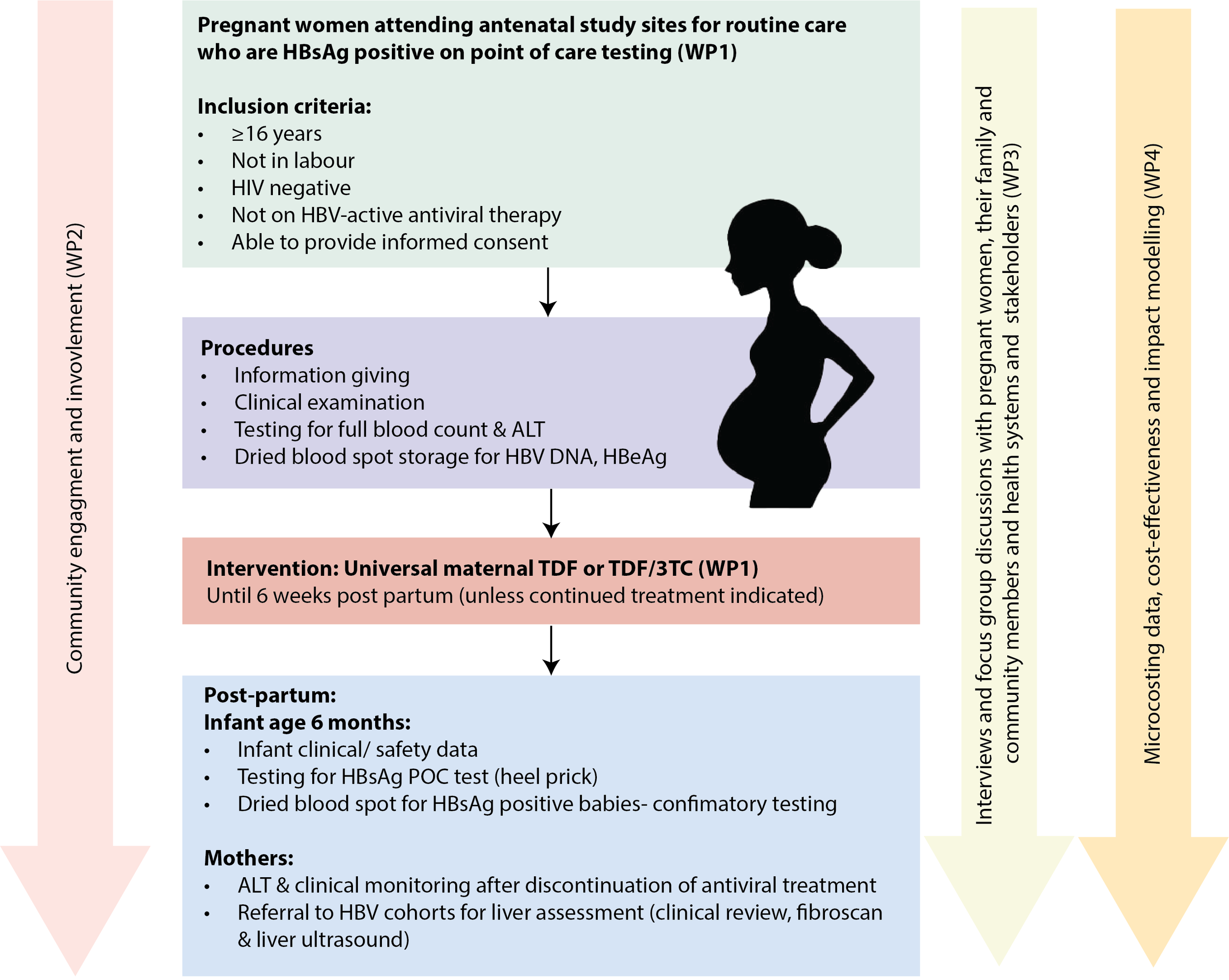
This study aims to evaluate a new method to prevent hepatitis B in Africa: universal tenofovir prophylaxis. This means giving an antiviral drug, tenofovir, to all pregnant women who test positive for hepatitis B to prevent vertical transmission.

What does the study involve?
There are three key steps to stopping hepatitis B vertical transmission:
First: Offer a test to all pregnant women who attend for antenatal care for hepatitis B (alongside HIV and syphilis).
Second: For women who test positive, and who have a high virus load (more than 200,000 IU/ml of HBV DNA), offer tenofovir early in pregnancy (from the 14th week). In research studies conducted in Asia, this reduced the risk of vertical transmission by around 85%.
Third: After birth and as soon as possible, we give a birth dose of hepatitis B vaccination to the newborn. This dose helps to protect the baby and is followed by further doses at 6, 10 and 14 weeks.
In many healthcare settings in African countries, there is limited access or availability to viral load testing, and very few women currently are able to access this HBV DNA test or to receive tenofovir.
The proposed solution, which this study will evaluate, is to give tenofovir to ALL pregnant women testing positive for hepatitis B, regardless of their virus load level. Tenofovir is a very safe drug in pregnancy and is given to millions of pregnant women every year (as it is also used as a medicine for HIV).
The STOP HBV study will assess the effectiveness, the feasibility, safety, acceptability and cost-effectiveness of this strategy in rural antenatal clinics in The Gambia and Malawi.
Follow Our Journey